This is one of the most important questions in renewable energy development, yet it is often addressed too late in the project lifecycle, after land has been secured, key assumptions have been made, and significant resources have already been committed.
Many people view a solar feasibility study as a technical document prepared to satisfy financing or regulatory requirements. In reality, it is one of the most critical engineering assessments undertaken during project development. A comprehensive feasibility study determines whether a project is technically feasible, commercially viable, operationally practical, and capable of delivering long-term value.
Importantly, a feasibility study does far more than confirm that a site receives sufficient sunlight. It evaluates the engineering, environmental, and infrastructure conditions that will ultimately determine whether a project can be successfully developed, constructed, and operated over its intended lifespan.
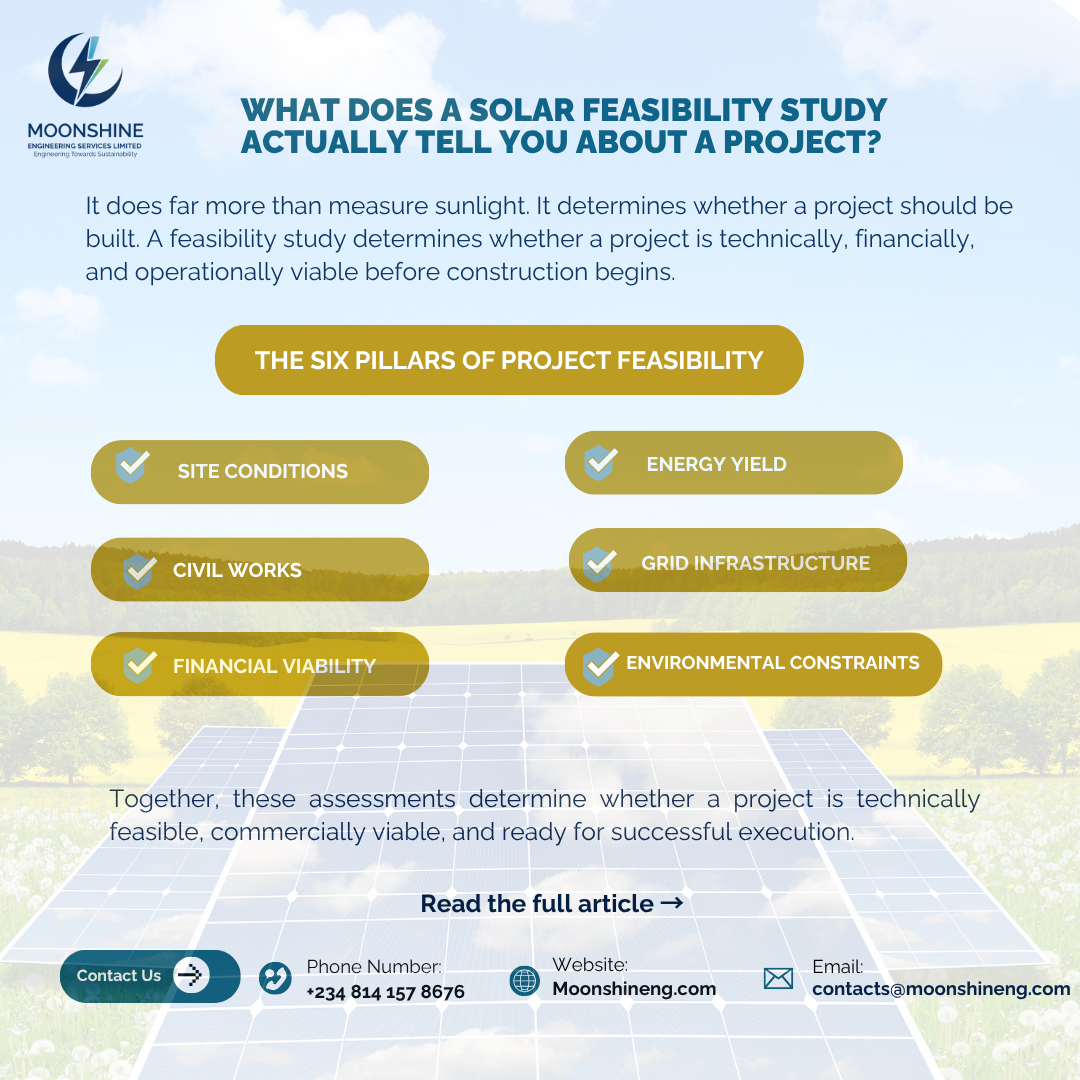
What Does a Solar Feasibility Study Evaluate?
A comprehensive feasibility study typically assesses several key areas, including:
- Grid Infrastructure: Can the existing electricity network accommodate and evacuate the proposed power generation without significant constraints or upgrades?
- Site Conditions: Do the terrain, topography, access routes, or soil characteristics present engineering or construction challenges?
- Energy Yield: Are projected energy production estimates realistic based on actual solar resources, site conditions, and system losses?
- Environmental and Regulatory Considerations: Could environmental constraints, permitting requirements, or regulatory approvals affect project timelines or viability?
- System Design: Is the proposed technology and system configuration appropriate for the site's operating conditions and project objectives?
- Commercial Performance: Will the expected long-term energy production and operational performance justify the proposed investment?
Together, these assessments provide a holistic view of project viability, enabling developers and investors to make informed decisions before construction begins.
Why Feasibility Studies Matter
As renewable energy projects continue to increase in scale, complexity, and capital investment, the importance of technical feasibility studies has never been greater.
Many of the most significant project risks are not caused by the solar technology itself, but by underlying engineering constraints that are overlooked during the early stages of development.
A project may appear financially attractive based on preliminary assumptions, only for detailed engineering assessments to identify issues such as limited grid capacity, unsuitable ground conditions, flood risks, environmental restrictions, or unrealistic energy production forecasts. Addressing these challenges after development has commenced can lead to increased costs, project delays, design changes, and reduced financial returns.
By identifying these risks early, feasibility studies improve planning accuracy, reduce uncertainty, and provide a stronger technical foundation for investment decisions.
At Moonshine, we believe that every successful renewable energy project begins with informed engineering decisions. Through comprehensive feasibility studies, energy modelling, grid assessments, and technical analysis, we help clients evaluate project opportunities with confidence and develop solutions that are both technically sound and commercially viable.